

A restructuring of the Monitoring Committee of the Fallas The designation of the Fallas festival as an Intangible Cultural Heritage of Humanity has generated criticism from the Associació d'Estudis Fallers (ADEF) and various local boards, including that of Dénia, who demand greater territorial representation and shared governance of the festival.
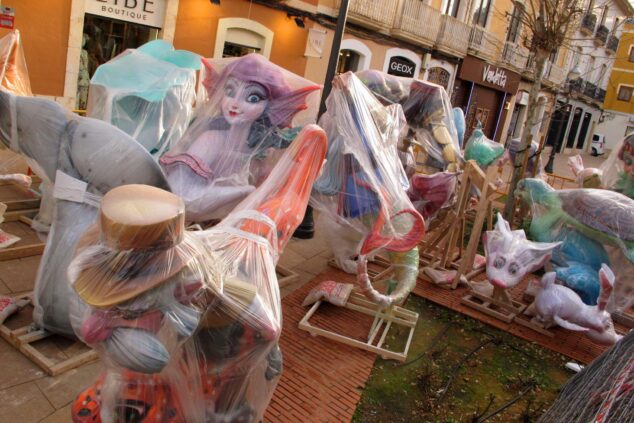
The controversy arises after the Valencia City Council approved a new composition last 25 September 2026, where Lo Rat Penat is incorporated and ADEF is excluded, leaving municipalities outside the capital without a direct voice.
Changes in the Commission and their implications
The change in the composition of the Fallas Monitoring Committee has sparked debate about participation in the protection and safeguarding of this festival, which is celebrated throughout much of the Valencian Community. The Valencia City Council approved this change in a Local Governing Board meeting, listing it as an item on the agenda. 77 from the session with the file E-01914-2026-000966-00.
The Commission in question is not a UNESCO body, but a municipal initiative of Valencia to oversee the protection of the cultural elements of the Fallas festival following its international recognition. 2016.
The departure of ADEF and the arrival of Lo Rat Penat
One of the main changes is the inclusion of Lo Rat Penat, an organization with a long history with the festival, which was already mentioned in the official record of the Fallas' recognition for its contribution to Fallas literature. Its president, Josep Vicent Navarro Raga, publicly thanked the mayor of Valencia, María José Catalá, and the councilor for Fallas and president of the Central Fallas Board, Santiago Ballester, for the decision.
However, this restructuring has led to the departure of the Associació d'Estudis Fallers (ADEF), which had been part of the commission since its inception. ADEF claims to have learned of its exclusion through the media and demands an explanation of the "technical, objective, verifiable, and duly argued reasons" for the decision. The association has been officially accredited by UNESCO since 2016, with renewal in 2025, as a non-governmental organization qualified to advise the Intergovernmental Committee for the Safeguarding of Intangible Cultural Heritage.
Dénia and the local councils demand representation
Meanwhile, Fallas festivals in municipalities outside of Valencia have reacted. Local Board Fallera Dénia has joined the demand shared by Fallas organizations in Paterna, Manises, Gandia, Alzira, Torrent, Xàtiva, Sagunt, Borriana, and Sueca, among others. The central argument is that the recognition of the Fallas as intangible cultural heritage should not be limited to the capital.
The Ministry of Culture It describes Las Fallas as the "cultural space of the Valencian Fallas festival," celebrated in more than 160 municipalities and with 800 commissions en 2016This territorial dimension is the basis of Dénia's protest, which maintains that the Fallas boards and federations that participated in the international recognition process continue without effective representation in the commission.
The Dénia Local Fallas Board has emphasized that "we are not questioning the inclusion of any group," but rather calling for a pluralistic, participatory, and representative commission that reflects all aspects of the festival. Dénia is not only requesting a seat on the current Commission, but also proposing to move towards a model of "shared governance" and the creation of an official "Ens Faller" (Fallas community) that gives voice to the diversity of the Fallas movement.
Political support from Dénia and criticism of the Valencia government
The councilman Dianense Valen Alcala, responsible for Youth and Sports by CommitmentAlcalà has publicly supported Dénia's position. He considers both the exclusion of ADEF and the absence of local boards outside of Valencia unjustified. He stated that without the commissions, the local boards, and the people who keep the Fallas festival alive throughout the year, "the Fallas wouldn't be what they are."
The Compromís councilor has accused PP y Vox to turn the Fallas culture into a tool politicalInstead of representing its plurality, this is a political accusation made by Alcalà. The PP and Vox parties are part of the Valencia city government, with María José Catalá as mayor and Santiago Ballester (PP) as councilor for the Fallas festival. Alcalà has linked her statement to an opinion piece published on September 29 by Albert Llueca, who argues that the debate transcends the composition of the Commission and focuses on the governance model of the Fallas.
The modification occurs before the tenth anniversary of the declaration of the Fallas as Intangible Cultural Heritage of Humanity, which is fulfilled in November of 2026The current demands focus on two requests: an explanation and reconsideration of ADEF's departure, and the effective participation of local boards and Fallas federations from outside Valencia in the heritage monitoring model.




Grow up already!