
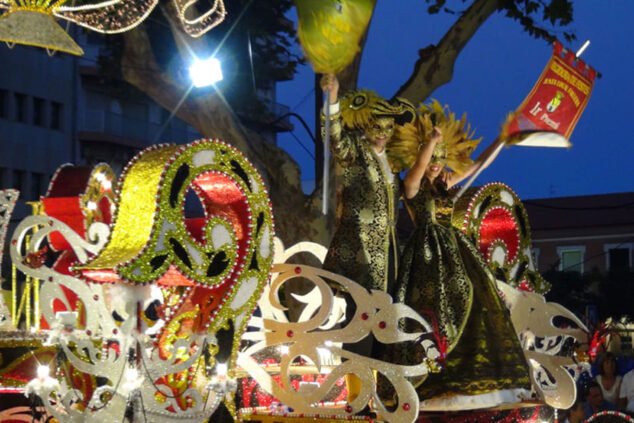
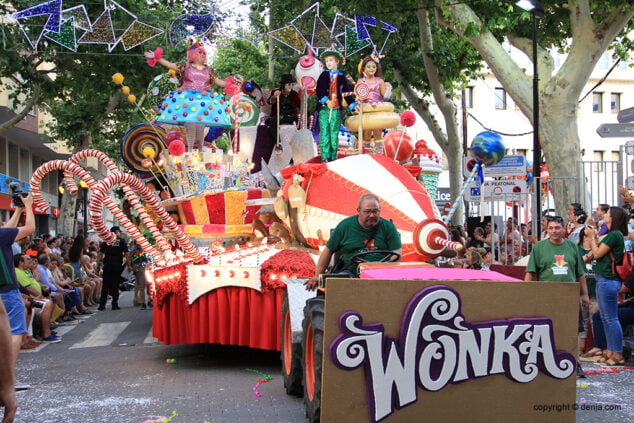
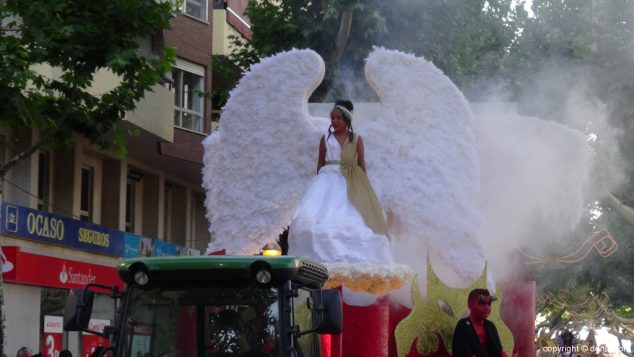
The parade of floats and comparsas is one of the main acts of the program of the festivals in honor of the Holy Blood of Dénia. They are popularly called Cars (in Valencian). The eleven fallas commissions of the city are in charge of making their own floats, which take to the streets on the last Saturday of the week of festivities to fill the center with colour.

The charges of each falla parade at the top of the float, while the rest of the commission accompanies them showing the costumes and animation they have worked on for months.
- 1.
- 1.1.
- 1.2.
- 2.
- 2.1.
- 2.2.
- 3.
- 4.
- 5.
- 5.1.
- 5.2.
- 5.3.
- 5.4.
- 5.5.
- 6.
- 7.
Date and Time
The celebration of the float parade in Dénia does not have an exact date, but it is always the second Saturday of parties in the afternoon. The patron saint festivities usually start on the first Saturday in July, and last 9 days, until the Sunday of the following week.
En 2023, the Dénia Floats will be held on Saturday, July 15 from 19:00 p.m.
Participants and order
- Children's guests float: with the federation of clubs of San Isidro de Yecla, federation of Clubs and Harvest Festivals of Jumilla, federation that manages popular festivities in Elx, Local Board Fallera de Sueca, Fallera Board of Sagunt, Fallera Local Board of Xàtiva, Fallera Local Board of Torrent and the Bellesa of the children's foc of les Fogueres d'Alacant, Inés Llavador, and the bridesmaids.
- Guest float: with the federation of clubs of San Isidro de Yecla, federation of Clubs and Harvest Festivals of Jumilla, managing federation of popular festivities of Elx, Local Fallera Board of Sueca, Fallera Board of Sagunt, Fallera Local Board of Xàtiva, Fallera Local Board de Torrent and the federation of Peñas Huertanas.
- Major Fallas Floats of Dénia and Courts of Honour.
- Musical artistic group.
- Float Falla Centro: the fonds marí
- Falla Nou Camp Roig float: Nights for convenience
- Float Falla Saladar: Huitantera
- Float Falla Les Roques: Gondola Venice
- Float Falla Darrere del Castell: The death festival.
- Float Paris Falla Pedrera: flower tai festival
- Float Falla Port Rotes: Burning Port Rotes
- Float Falla Baix la Mar: through l'espill
- Float Falla Oeste: mon elfic
- Float Falla Campaments: The Flying Dutchman
- Float Falla Diana: Gods of Egypt: The Scorpion King
- Quintos
Suspension due to the pandemic
During 2020 and 2021 this parade was canceled, like most traditional events of the Santíssima Sang Festival, due to the coronavirus pandemic.

Parade and competition
The competition is also present in the Dénia float parade. Fallas commissions fight to reach the first float prize and the first comparsa prize that is awarded each year. Unlike the prizes of failuresIn floats there are no sections and all compete equally.
Jury
A jury evaluates various aspects of each float such as the design, finish, colors and technique used, while another jury is in charge of evaluating the troupes that each falla has prepared to accompany the float. In this case, the costumes, the theme and the dance are taken into account.
Categories
Although prizes are established for large and children's floats, the high cost that the production of two floats entails for each fallera commission has meant that in recent years few commissions have chosen to create two floats. So they take out a single design on the street in which their adult and child positions are grouped.
Location and route
The parade itinerary is:
- Marqués de Campo
- Diana
- Patricio ferrándiz
- Marqués de Campo
Every year the floats go around this route twice, the first to show off before the jury and the second to collect and celebrate their prize.
Sale of chairs
To be able to witness the parade of floats, the street has chairs that can be occupied at a reduced price. Normally, a booth is placed in Marqués de Campo, near where the grandstand will go during the parade, to acquire the front row seats. The second row are occupied at the time of the act and a worker passes by to collect. The price of tickets is 5 euros.
History
The history of the parade floats in Dénia dates back to the early twentieth century, but was then called Battle of Flowers. The success of this celebration at the July fair in València led several towns to adapt the festive initiative, which allowed them to show their neighbors the originality and good atmosphere in the parade, in which confetti and streamers were not lacking.
The Battle of Flores
Dénia, Batalla de las Flores joined the celebrations of the Holy Blood, parties that during the Republic became known as Summer Festival. After the Civil War, with very flagging spirits, also he declined the celebration of the Battle of Flowers.
The Fallas take the baton
It was with the birth of the first Fallas commissions in the city, in the 1947-1948 financial year, when the City Council considered commissioning the Fallas to make floats for the major festivals. A year later, on July 18, 1949, the four existing faults (Centro, Baix la Mar, Les Roques and Oeste) crossed the streets of Marqués de Campo, Diana, Magallanes and Carlos Sentí, returning to Marqués de Campo for a second round. In addition to the fallas floats, the City Council invited several young people from the municipality to participate in the municipal float. The queen of the festivities that year was Vicenta Bertomeu.

The early years of the Battle of Flowers were a success in Denia, with a population that willingly accepted this new festive event and encouraged the fallas to create elaborate designs for their floats.
Years without floats
In 1951, and due to the deficit suffered by the municipal coffers, the City Council was forced to reduce the festivities to a mass, processions and music on the day of the patronal feast. In 1953 the floats returned to the streets, but this time only the Fallas Centro, Baix la Mar and Les Roques paraded.
Mia Farrow's floats
The year 1958 went down in the history of Dénia as the year of the recording of the American blockbuster Captain Jones, which brought to the city great income and the visit of the director, John Farrow and his wife, actress Maureen O'Sullivan, who were accompanied by their daughter, Mia Farrow. The young woman was proclaimed by the City Council as Queen of the Festivities of that year and participated in all the programming, including the parade of floats through the center of the city.

From the anger of the Fallas to the declaration of a Festival of Provincial Tourist Interest
For a few years, the fallas were separated from the float parade due to the City Council's insistence on changing the date of the fallas celebration, moving it from March to summer. The goal was to turn them into Fogueres (bonfires) as in Alicante.
With the second stage of the Fallas, starting in 1968, normality was resumed in the parade of floats, which grew every year in parallel with the growth of the city's Fallas commissions. Currently the Parade of Floats and Comparsas of the Santísima Sangre festivities are a festival declared of Provincial Tourist Interest and they bring together thousands of people every year along the route.
ADIEX
Photos
-
 2022 Camps float

-
Darrere del Castell float of 2022

-
Camp Roig float of 2022

-
2022 Guest Float

-
Baix la Mar float of 2022

-
Downtown float 2022

-
Diana float of 2022

-
Hearse of the West 2022

-
2022 Saladar float

-
2022 Les Roques float

-
Float of the Quintos of 2022

-
Paris Pedrera float of 2022

-
Port-Rotes float of 2022

-
Float with which Baix la Mar won in 2019
-
First coach of Les Roques fault - Year 1949
-
Carroza fails Baix la Mar - year 1957

-
 Carrola Falla Centro - Year 1954

-
 Les Roques Fault Carriage - Year 1956

-
Float fails West - Year 1955

-
West Falla Float - Year 1959

-
First float of the Central fault - year 1949

-
First float of the Les Roques fault

-
 Mia Farrow and her parents
-
Carrozas Dénia 2015 - Fallera Mayor Infantil de Dénia and court of honor

-
Carrozas Dénia 2015 - Fallera Mayor de Dénia and court of honor

-
Dénia 2015 floats - Baix la Mar Children's Comparsa

-
Dénia 2015 floats - Baix la Mar Children's Comparsa

-
Dénia 2015 floats - Comparsa Baix la Mar

-
Dénia 2015 floats - Baix la Mar charges

-
Dénia 2015 floats - Comparsa Baix la Mar

-
Dénia 2015 floats - Comparsa Baix la Mar

-
17 Floats Dénia 2015 - Comparsa Baix la Mar

-
Dénia 2015 floats - Camp Roig

-
Dénia 2015 floats - Camp Roig
-
Dénia 2015 floats - Fallera Mayor Camp Roig

-
Dénia 2015 floats - Comparsa infantil Oeste

-
Dénia 2015 floats - Comparsa infantil Oeste

-
Dénia 2015 floats - West Children's float

-
Dénia 2015 floats - Comparsa Oeste

-
Dénia 2015 floats - West Falla float

-
Dénia 2015 floats - Comparsa Falla Campaments

-
Dénia 2015 floats - Comparsa Falla Campaments

-
Dénia 2015 floats - Campala Falla float

-
Carrozas Dénia 2015 - Tribune of authorities

-
Dénia 2015 floats - Comparsa Darrere del Castell

-
Dénia 2015 floats - Darrere del Castell float

-
Dénia 2015 floats - Darrere del Castell float

-
Dénia 2015 floats - Les Roques Children's Comparsa

-
Dénia 2015 floats - Les Roques Children's Comparsa

-
Dénia 2015 floats - Les Roques children's float

-
Dénia 2015 floats - Comparsa Les Roques

-
Dénia 2015 floats - Comparsa Les Roques

-
Dénia 2015 floats - Les Roques float
-
Dénia 2015 floats - President Les Roques

-
Dénia 2015 floats - Paris Pedrera Children's Comparsa

-
Dénia 2015 floats - Paris Pedrera children's carriage

-
Dénia 2015 floats - Comparsa Paris Pedrera

-
Dénia 2015 floats - Pedrera Paris float

-
Dénia 2015 floats - Comparsa infantil port Rotes

-
Dénia 2015 floats - Comparsa infantil port Rotes

-
Carrozas Dénia 2015 - Carro Rots

-
Dénia 2015 floats - Comparsa Falla Diana

-
Dénia 2015 floats - Comparsa Falla Diana

-
Dénia 2015 floats - Comparsa infantil Falla Centro

-
Dénia 2015 floats - Comparsa infantil Falla Centro

-
Dénia 2015 floats - Comparsa Falla Centro

-
Dénia 2015 floats - Center Failure Float

-
Dénia 2015 floats - Comparsa infantil Falla Saladar

-
Dénia 2015 floats - Salazar Falla children's carriage

-
Dénia 2015 floats - Comparsa Falla Saladar

-
Dénia 2015 floats - Saladar Failure Float

-
Dénia 2015 floats - Quintos 2015

-
Floats Dénia 2015 - First prize Falla West
-
Dénia 2015 floats - First prize comparsa Port Rotes


Wow what a good program.
BUT THEY MUST CANCEL THE PYROTECHNICS!!!!
On the beach they did not let us make a fire because of the danger of ignition…
Around Torrectemada there are many agricultural and dry sites. I am afraid every summer. Private fireworks, barbecues….
Visit the festivities